
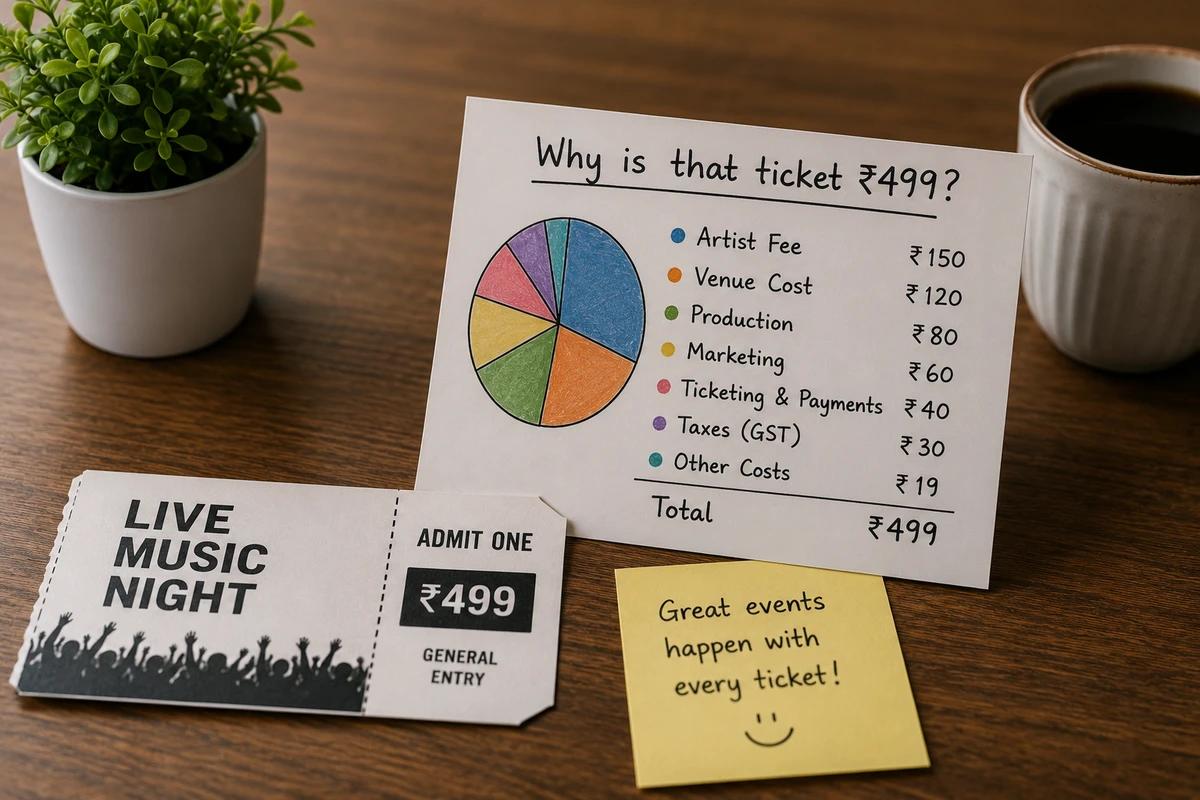
The ₹500 GST line, early-bird economics, and unstandardised tier names — how ticket prices in India are really set, for buyers and organisers.
Ever noticed how many event tickets in India are priced at exactly ₹499? Or wondered why the same show costs ₹600 in week one and ₹1,000 by event week? None of this is random. Ticket pricing is a small machine with visible gears — and once you understand it, you'll buy smarter as an attendee and price sharper as an organiser.
I'll decode the whole machine: tiers, early birds, taxes, convenience fees, and the psychology underneath. This is the stuff platforms know, organisers half-know, and attendees almost never get told.
The ₹500 Line: India's Most Important Number in Ticketing
Start with the mystery of ₹499, because it explains a lot.
Under GST rules, admission to specified entertainment events — circus, dance, theatrical and similar performances — is exempt from GST when the ticket price is ₹500 or below, and taxed at 18% above that. Cross the line by one rupee and tax applies to the ticket.
So a ₹499 ticket can cost you ₹499. Price that same ticket at ₹599 and, with 18% GST, the effective cost lands at roughly ₹707. That's why the Indian events market has a visible cluster of pricing at ₹499 and below — it's not a marketing gimmick, it's tax structuring that benefits both sides. (One 2025 footnote: a new 40% luxury GST slab now applies to premium properties like IPL matches — but regular concerts, comedy, and cultural events aren't in that bracket.)
Attendee takeaway: when comparing two events, compare the checkout price, not the listed price. The tax treatment above and below ₹500 can make a "slightly more expensive" ticket meaningfully more expensive.
Why Early Bird Tickets Are Genuinely Cheap (Not Fake-Discounted)
The early bird tier isn't charity, and it isn't a fake "was ₹999, now ₹599" trick. It's the organiser buying two things with real money:
Cash flow. Events have heavy upfront costs — venue advances, artist deposits — paid weeks before revenue arrives. Early sales fund the event itself. Organisers will genuinely trade margin for money-now.
Momentum. An event that's visibly selling creates confidence; an event with zero traction creates doubt. Those first buyers are walking advertisements — they post stories, they recruit their group, they make the event look real. (This is the core engine of event marketing; our promotion playbook is essentially built around it.)
Which leads to the most reliable money-saving rule in Indian ticketing: the first price is almost always the best price. Prices for a given event basically move in one direction — up — as tiers sell out and the date approaches. If you know you're going, the two weeks you spend "deciding" typically cost you 30–60% extra.
The one exception worth knowing: occasionally, undersold events run last-minute promo codes to fill the room. It happens — the FICCI-EY report even noted some 2025 concerts failed to sell out amid over-exuberant supply — but betting on it is a gamble that fails exactly when you care most, because the events you most want are the ones that don't need to discount.
Tier Names Mean Nothing. Read the Description.
Here's an inconvenient truth about Indian events: tier naming is completely unstandardised. "Gold" at one event is a great seat and a complimentary drink. "Gold" at another is a marginally better patch of standing room. "VIP" might mean a lounge, or it might mean entering through a different gate.
There's no regulation, no convention, nothing. The tier name is branding; the tier description is the contract. Thirty seconds reading what's actually included — seating vs standing, view, F&B, entry lane — prevents most "this isn't what I paid for" disappointment. (More pre-payment checks like this in our complete booking guide.)
For organisers: this cuts the other way. Vague tier descriptions cause gate arguments and refund demands. Spell out precisely what each tier includes — you're writing the document your gate staff will enforce at 8 PM.
The Fees Between Listed Price and Paid Price
Between the ticket price and your final bill sit two possible additions worth understanding:
- GST, as covered — 0% or 18% depending on price and event category.
- Convenience / booking fees, which platforms may charge to cover payment gateway costs, tech, and support. This is standard across the industry; what matters is transparency. A well-run checkout shows you the full breakup before payment, not after.
The practical habit: judge events by the final checkout number. Two events "priced" identically can differ at checkout, and the checkout number is the only one your bank statement will ever see.
Group Pricing: The Most Underused Discount in India
Group offers — 4 tickets for the price of 3.5, flat rates for 5+ — are common for comedy shows, workshops, and club events, and chronically underused by attendees.
They exist because of a truth every organiser learns: in India, event attendance is a group decision. Almost nobody attends alone; the real unit of sale is the friend group, not the individual. A group discount converts four maybes into four confirmed tickets in one transaction — cheap at the price. If you're booking for your circle anyway, always check for a group tier before paying individually.
What This Means, Depending on Which Side You're On
If you're buying: book early, read the tier description not the tier name, compare checkout prices not listed prices, and use group offers. Do those four things and you'll consistently pay less than the average attendee for identical experiences.
If you're organising: structure tiers around the ₹500 GST line where your economics allow, make the early bird genuinely limited and genuinely cheaper, describe every tier like a contract, and raise prices on the schedule you announced — credibility with your audience is worth more than one week's margin. (The full pricing-to-gate workflow is in our organiser guide.)
The context making all of this matter: India's live events market crossed ₹13,000 crore, with 78% of Indian consumers now preferring experiences over products. More events, more tiers, more pricing games — and more edge for the people who understand the machine.
See real pricing across live events in your city on the Showmates Explore page.
Frequently Asked Questions
Related Articles

Top New Year Events We Organise on Showmates Every Year
Every December, as people begin planning how to welcome the New Year, one question comes up again and again — where should we celebrate this time?
Read More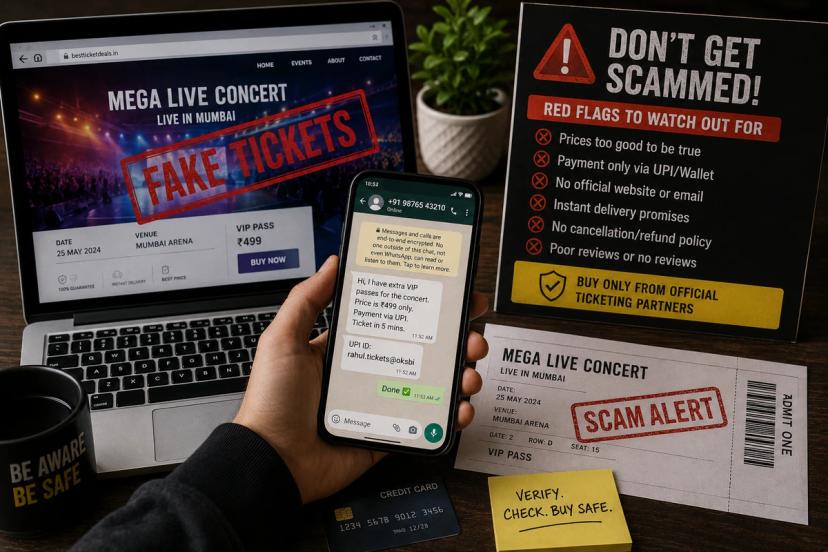
Fake Event Ticket Scams in India: How They Work and How to Not Get Burned
The four scams behind most fake ticket cases in India, the red flags that expose them, and the one buying rule that beats them all.
Read More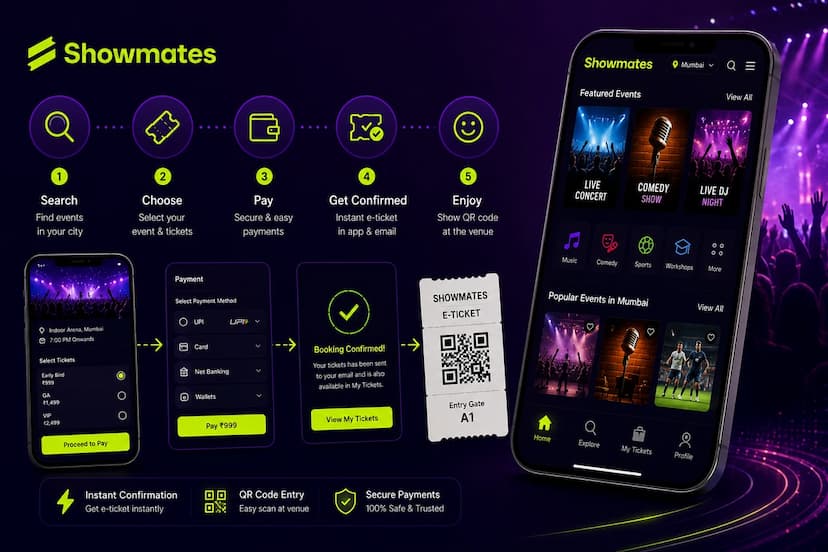
How to Book Event Tickets Online in India — The Complete Guide
From finding the right events to securing the best seats and deals, here’s a complete beginner-friendly guide to booking event tickets online in India.
Read More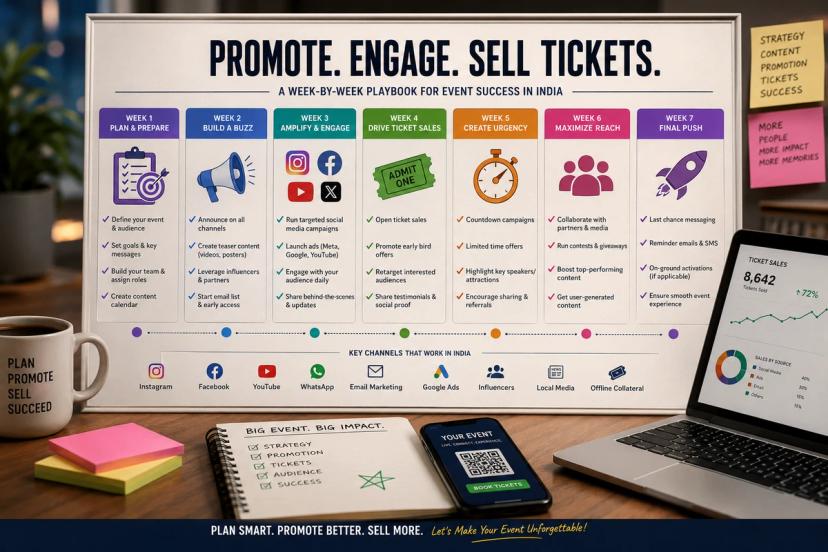
How to Promote an Event in India and Actually Sell Tickets — A Week-by-Week Playbook
A six-week countdown built for how tickets actually sell in India — Instagram discovery, WhatsApp decisions, and momentum-first pricing.
Read More