
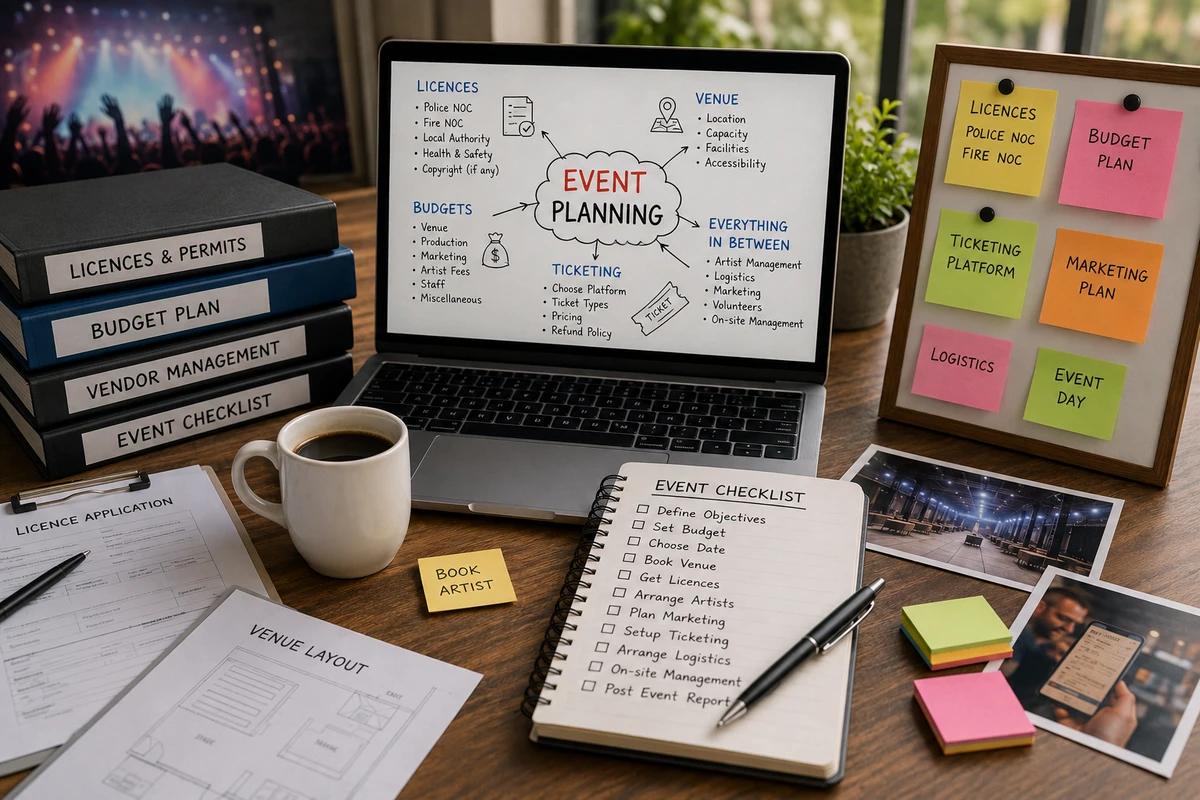
From police NOCs and music licences to GST and QR entry — the complete organiser's checklist for running a ticketed event in India.
Here's something nobody tells first-time organisers: the event itself is the easy part. Booking an artist, designing a poster, picking a venue — that's the fun 30%. The other 70% is paperwork, permissions, pricing maths, and making sure 400 people can get through a gate without a stampede at 7 PM.
I've watched organisers pull off brilliant shows on shoestring budgets, and I've watched well-funded events collapse because someone forgot a fire NOC. This guide covers the full process of organising a ticketed event in India in 2026 — from the first budget sheet to scanning the last QR code at the gate.
And the timing has never been better. According to the FICCI-EY Media & Entertainment Report 2026, live events grew 44% in 2025 — the fastest-growing segment in India's entire media and entertainment industry. If you've been sitting on an event idea, this is the market telling you to move.
Step 1: Lock the Format Before You Lock Anything Else
Every decision downstream — venue, licences, budget, ticket price — depends on what kind of event you're running. A 100-person comedy night in a café has completely different requirements than a 3,000-person open-air concert.
Ask yourself three questions before spending a rupee:
- Indoor or outdoor? Outdoor events need more permissions, weather contingency, and generators. Indoor venues often come with sound systems and existing licences.
- Ticketed or free entry? The moment you charge for entry, GST, refund policies, and consumer expectations enter the picture.
- Alcohol or no alcohol? This single decision changes your licensing burden more than almost anything else. Liquor permissions are state-specific, expensive, and slow. In dry states like Gujarat, they're effectively off the table for most private events.
A useful exercise: write down your event in one sentence. "A 300-person ticketed indie music night, indoors, no alcohol, tickets at ₹499." That sentence is basically your permissions checklist in disguise.
Step 2: The Permissions and Licences You Actually Need
This is where most first-time organisers get nervous, so let me demystify it. Requirements vary by city and event type, but here's the standard stack for a ticketed public event:
Police permission / NOC. Applied for at the local police station or commissioner's office (many cities now have online single-window systems). You'll typically need the venue agreement, event details, expected footfall, and security plan. Apply at least 2–3 weeks out — earlier for large events.
Venue and fire safety NOC. Established venues usually hold their own fire clearances — ask for a copy, don't assume. For temporary structures (stages, pandals, outdoor setups), you may need a separate fire department NOC and a structural stability certificate for the stage.
Music licences. If copyrighted music is performed or played at your event — live or recorded — you need licences from the relevant copyright societies. Per the Indian Performing Right Society (IPRS), a licence is required for every public performance of copyrighted music under its control, regardless of venue type or whether admission is charged. IPRS covers the underlying musical and literary works; PPL and Novex handle sound recordings. Many organisers skip this and get away with it at small scale — until they don't. Legal notices mid-event are a real thing, and they're not cheap to resolve.
Liquor licence (if serving). State excise department, temporary event licence. Costs and timelines vary wildly by state. Budget both money and patience.
Miscellaneous, depending on your event: loudspeaker permission (there are court-mandated noise limits and a 10 PM cutoff for outdoor amplified sound in most areas), traffic police intimation for large gatherings, and ambulance/medical arrangements for big crowds.
One honest tip: call the venue first and ask what they already have. Good venues have done this dance a hundred times and can tell you exactly which permissions fall on you versus them. It's the fastest shortcut in this entire process.
Step 3: Understand the Tax Side (It's Simpler Than It Looks)
Two things matter here.
First, GST on your tickets. Admission to entertainment events — concerts, theatre, cultural shows — is generally taxed at 18% when the ticket price exceeds ₹500, while tickets priced at ₹500 or below are exempt for specified categories like circus, dance, and theatrical performances. This is why you'll notice so many events in India priced at ₹499 — that's not a coincidence, it's tax structuring. (Premium properties like IPL matches now sit in a 40% luxury slab after the September 2025 GST revision, but that doesn't apply to regular concerts and shows.)
Second, GST registration for yourself. If your business turnover crosses the threshold (₹20 lakh for services in most states), you need a GSTIN. Event management services themselves attract 18% GST, and registered organisers can claim input tax credit on vendor expenses — sound, catering, decor. If you're planning to organise events regularly, registering early makes your vendor invoicing much cleaner.
I'm simplifying a genuinely complicated area here — for anything beyond a small event, spend one hour with a CA. It'll pay for itself.
Step 4: Budget Like a Pessimist
Here's a budgeting rule that has saved more organisers than any spreadsheet template: assume you'll sell 60% of capacity, and make the event survive at that number. If it works at 60%, everything above that is profit. If your break-even requires a sold-out show, you're not running an event — you're buying a lottery ticket.
Typical cost buckets for a mid-size ticketed event:
- Venue — usually the biggest line item; negotiate for a revenue-share deal if you're confident about turnout
- Artist / performer fees — often paid 50% advance, 50% on the day
- Production — sound, lights, stage; don't cheap out on sound for music events, ever
- Permissions and licences — small individually, annoying collectively
- Marketing — a common mistake is budgeting ₹0 here and hoping Instagram carries you
- Contingency — keep 10% untouched; something always breaks
Step 5: Set Up Ticketing Properly (This Is Where Events Are Won or Lost)
Cash at the gate is dead, and good riddance. UPI processed over 24,100 crore transactions in FY2025-26 according to Press Information Bureau data — your audience expects to pay with one tap and receive a QR code instantly.
A proper online ticketing setup gives you four things that a Google Form and a UPI QR sticker never will:
- Real-time sales visibility. You know at any moment how many tickets are gone, which tier is moving, and whether your marketing push worked.
- Tiered pricing and promo codes. Early bird batches build momentum (more on this in our event promotion playbook); promo codes let you track which channel actually sells.
- QR-based entry. Scan-and-enter eliminates gate fraud, duplicate tickets, and the guy insisting his friend "already paid bro."
- A clean refund and cancellation trail. When something goes wrong — and eventually something will — having every transaction on record protects you.
If you're listing your first event, Showmates' List Your Show walks you through it — ticket tiers, promo tools, affiliate tracking, and QR entry are built in, so you're not stitching five tools together. Once live, your event appears on the Explore page where people in your city are already browsing.
And whatever platform you use, write your refund policy before tickets go on sale, and display it on the event page. It's the single most common source of attendee disputes, and it's entirely preventable. (Here's the attendee side of that story: how people book event tickets online in India — worth reading to understand what your buyers check before paying.)
Step 6: Event Day — The Boring Checklist That Saves You
- Do a full soundcheck before doors open, not during
- Brief your gate team on the QR scanning flow and the ID policy; the gate is where your event's reputation is made
- Keep one person whose only job is problem-solving — no fixed role, just fires
- Charge two power banks; venue Wi-Fi and mobile networks choke when 500 people arrive
- Announce last entry time and stick to it
After the event, export your sales data while it's fresh. Which tier sold out first, when the spikes happened, which promo code performed — this is the marketing brief for your next event, written by your own audience.
The Honest Truth About Your First Event
Your first event will probably not make money. That's fine — it's not supposed to. It's supposed to teach you your city's audience, build your organiser reputation, and give you a mailing list of people who showed up once and might show up again. The organisers filling venues today are mostly people who broke even (or lost a little) on shows one and two, then compounded.
The market is on your side. India's live events industry crossed ₹13,000 crore, tier-2 cities are hosting shows that once only happened in Mumbai, and audiences are actively looking for things to do. The gap in most cities isn't demand — it's organisers willing to do the unglamorous work above.
Ready to list your event? Start with List Your Show or download the Showmates app.
Frequently Asked Questions
Related Articles

Top New Year Events We Organise on Showmates Every Year
Every December, as people begin planning how to welcome the New Year, one question comes up again and again — where should we celebrate this time?
Read More about Top New Year Events We Organise on Showmates Every Year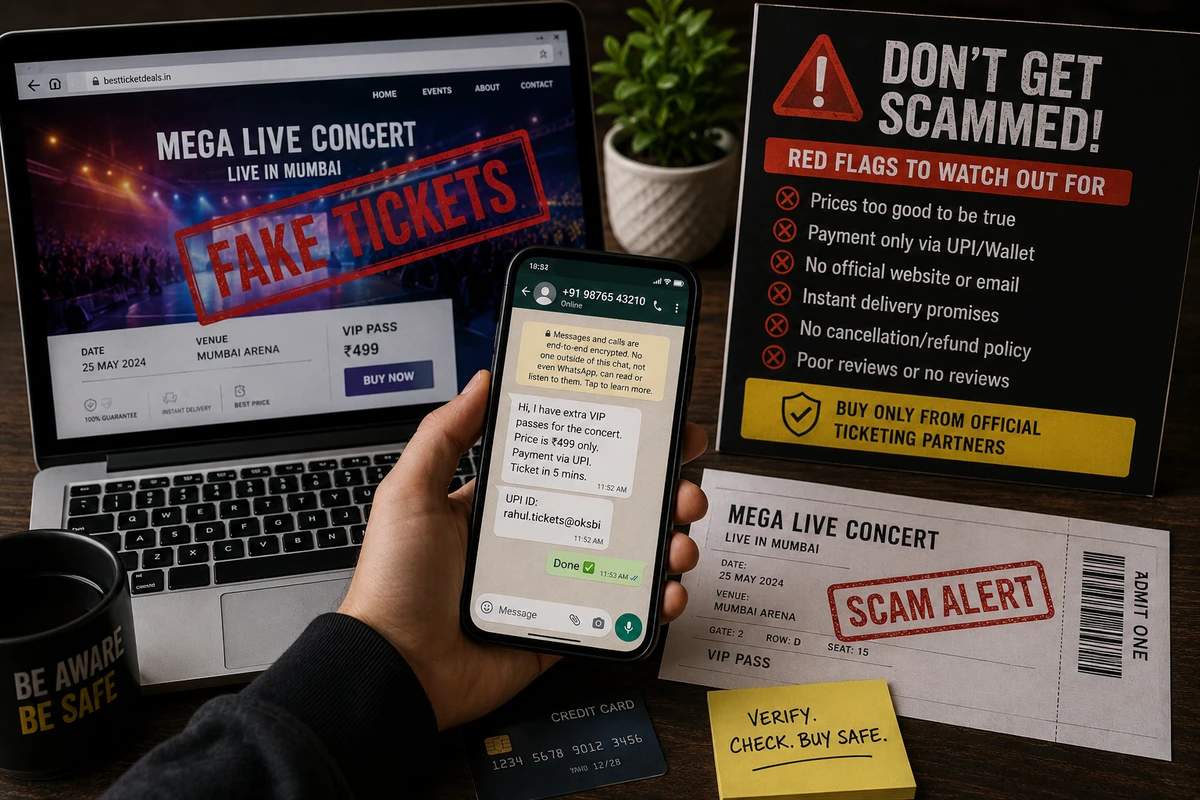
Fake Event Ticket Scams in India: How They Work and How to Not Get Burned
The four scams behind most fake ticket cases in India, the red flags that expose them, and the one buying rule that beats them all.
Read More about Fake Event Ticket Scams in India: How They Work and How to Not Get Burned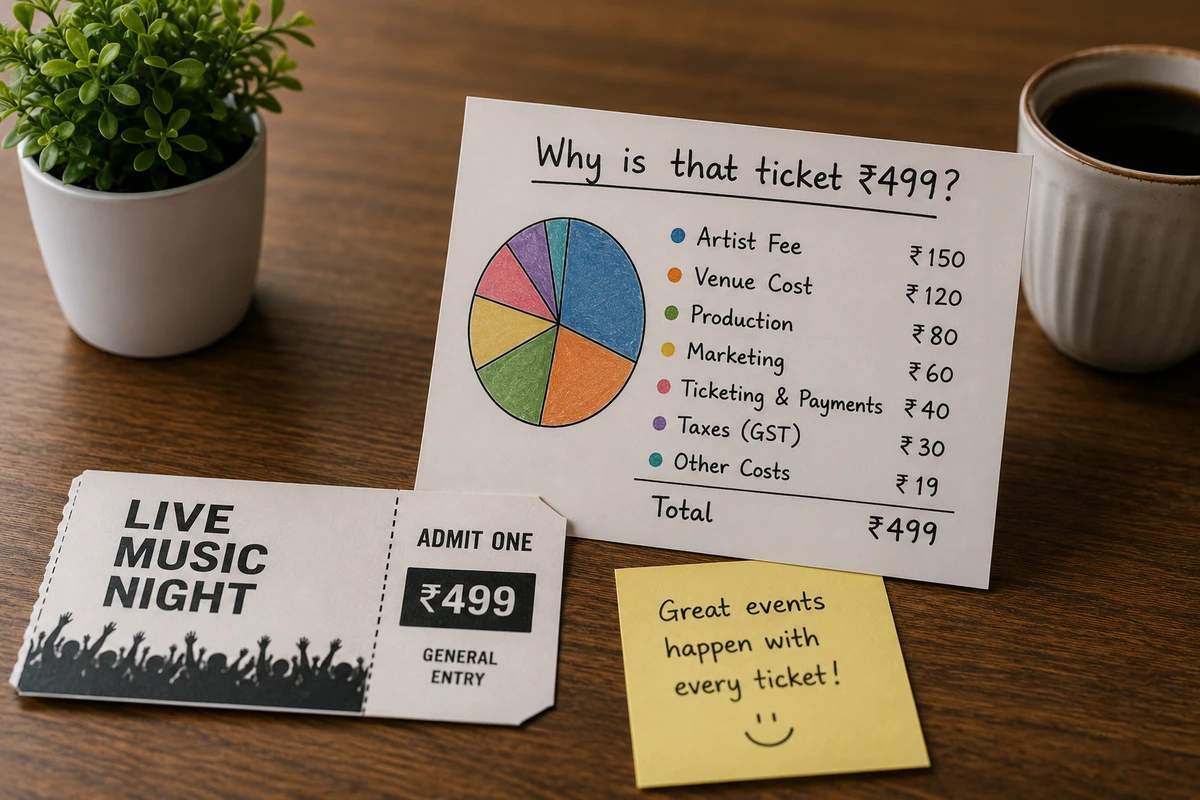
Why Is That Ticket ₹499? How Event Ticket Pricing in India Actually Works
The ₹500 GST line, early-bird economics, and unstandardised tier names — how ticket prices in India are really set, for buyers and organisers.
Read More about Why Is That Ticket ₹499? How Event Ticket Pricing in India Actually Works
India's Concert Boom Is Real: Inside the ₹13,000 Crore Live Events Economy
From 130+ arena-scale concert days to tier-2 sellouts — the numbers behind India's live entertainment surge, and where it goes next.
Read More about India's Concert Boom Is Real: Inside the ₹13,000 Crore Live Events Economy